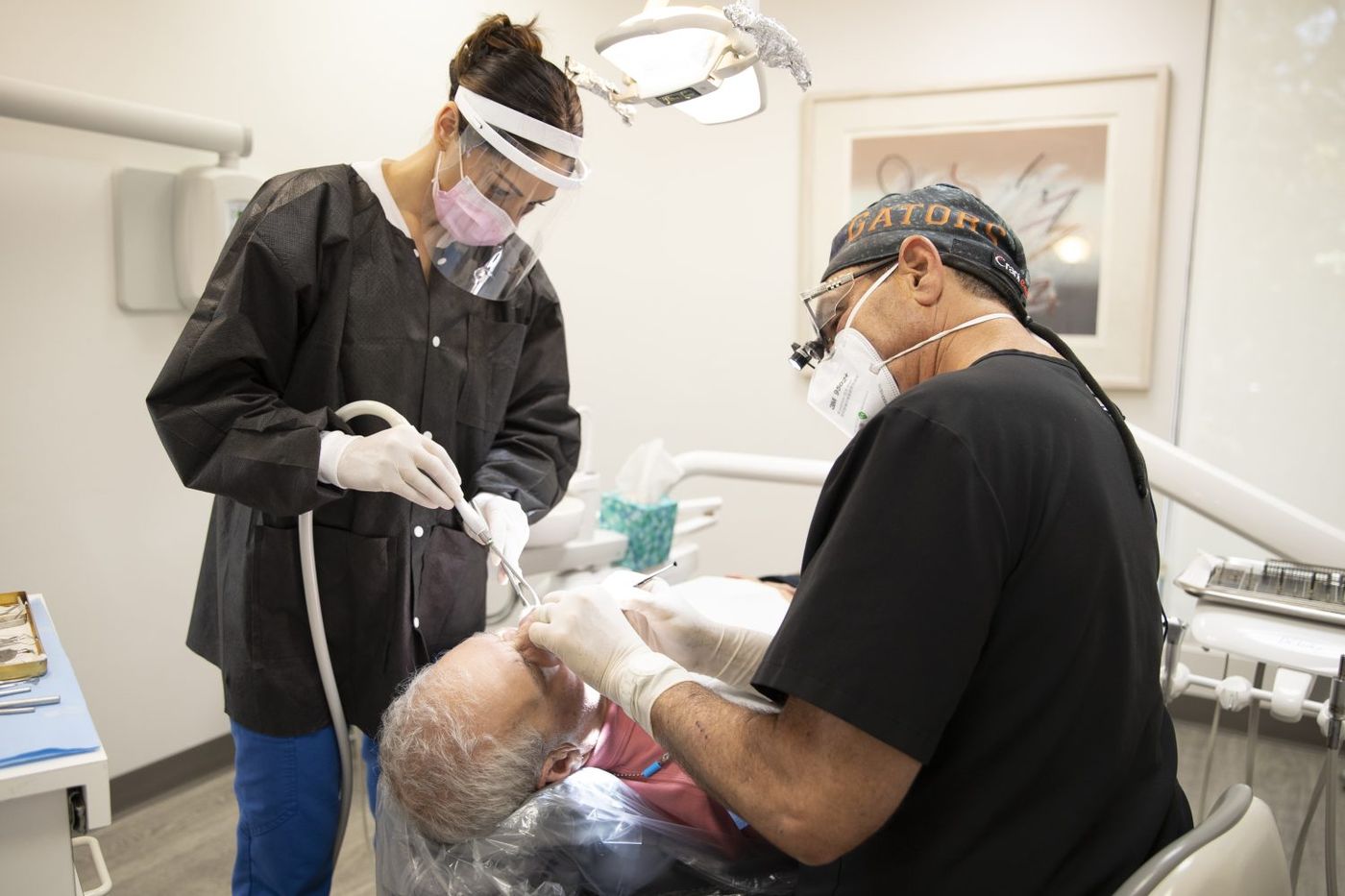
Cosmetic Periodontal Surgery
Crown Lengthening
Reshapes gum and bone to expose more tooth structure — improving function and creating a healthier foundation for crowns and restorations.

Overview
More tooth to work with, for a restoration that lasts
Sometimes a tooth is broken, decayed or worn down to the point where too little of it shows above the gumline. Without enough exposed tooth structure, a crown or filling cannot hold securely or seal properly.
Crown lengthening carefully adjusts the level of the gum and supporting bone to expose more of the tooth. This gives your dentist the structure they need to place a restoration that fits well, stays healthy and lasts.
This treatment may help if you have:
- Tooth broken near the gumline
- Decay below the gumline
- Short teeth that need a crown
- Crown margins irritating the gums
The Process
What to expect, step by step
- 01
Evaluation
We review your dentist's plan, examine the tooth and take X-rays.
- 02
Procedure
Under local anesthesia, the gum and, if needed, a small amount of bone are reshaped.
- 03
Healing
The gums are given time to heal and stabilize at their new level.
- 04
Restoration
Your dentist places the final crown or restoration on the healed tooth.
Benefits
Why crown lengthening helps
Saves the tooth
Exposing healthy structure can make it possible to restore a tooth that might otherwise be lost.
Better-fitting crowns
More tooth structure means a stronger, more secure restoration with a cleaner seal.
Healthier gums
Restorations that respect the natural gum attachment are easier to keep clean and less irritating.
Crown Lengthening: your questions, answered
General information to help you prepare. Your periodontist will recommend treatment based on your exam.
Crown lengthening is a periodontal procedure that removes or reshapes gum tissue and, when needed, bone to expose more tooth structure. It creates a healthier foundation for crowns and restorations.
It is often recommended when a tooth is broken, decayed below the gumline, or too short to hold a crown securely. Exposing more tooth allows a better-fitting restoration.
Functional crown lengthening is performed to restore a damaged tooth. Esthetic crown lengthening improves the appearance of a gummy smile, although the techniques are similar.
The procedure is performed under local anaesthesia, so patients remain comfortable. Post-operative discomfort is usually mild and managed with over-the-counter medication.
Most procedures take about one hour, depending on the number of teeth involved. Treating multiple teeth may require additional time.
Initial healing takes one to two weeks, while gum tissue stabilizes over six to twelve weeks. Your dentist usually waits for this before placing the final crown.
Often, yes. Your dentist may place or adjust a temporary crown so the tooth remains protected and functional while the gums heal.
In many cases, exposing healthy tooth structure makes it possible to restore a tooth that might otherwise need extraction. Each case is evaluated individually.
Soft foods are recommended for the first several days, avoiding chewing on the treated area. Gentle cleaning helps the gums heal properly.
Costs vary based on the number of teeth and whether bone reshaping is required. A consultation provides an evaluation and a detailed cost estimate.
Not sure which treatment you need?
Schedule a consultation and we'll create a personalized plan — including financing options — for your smile.