Dental Implants & Full-Arch Restoration
Treating Ailing Implants
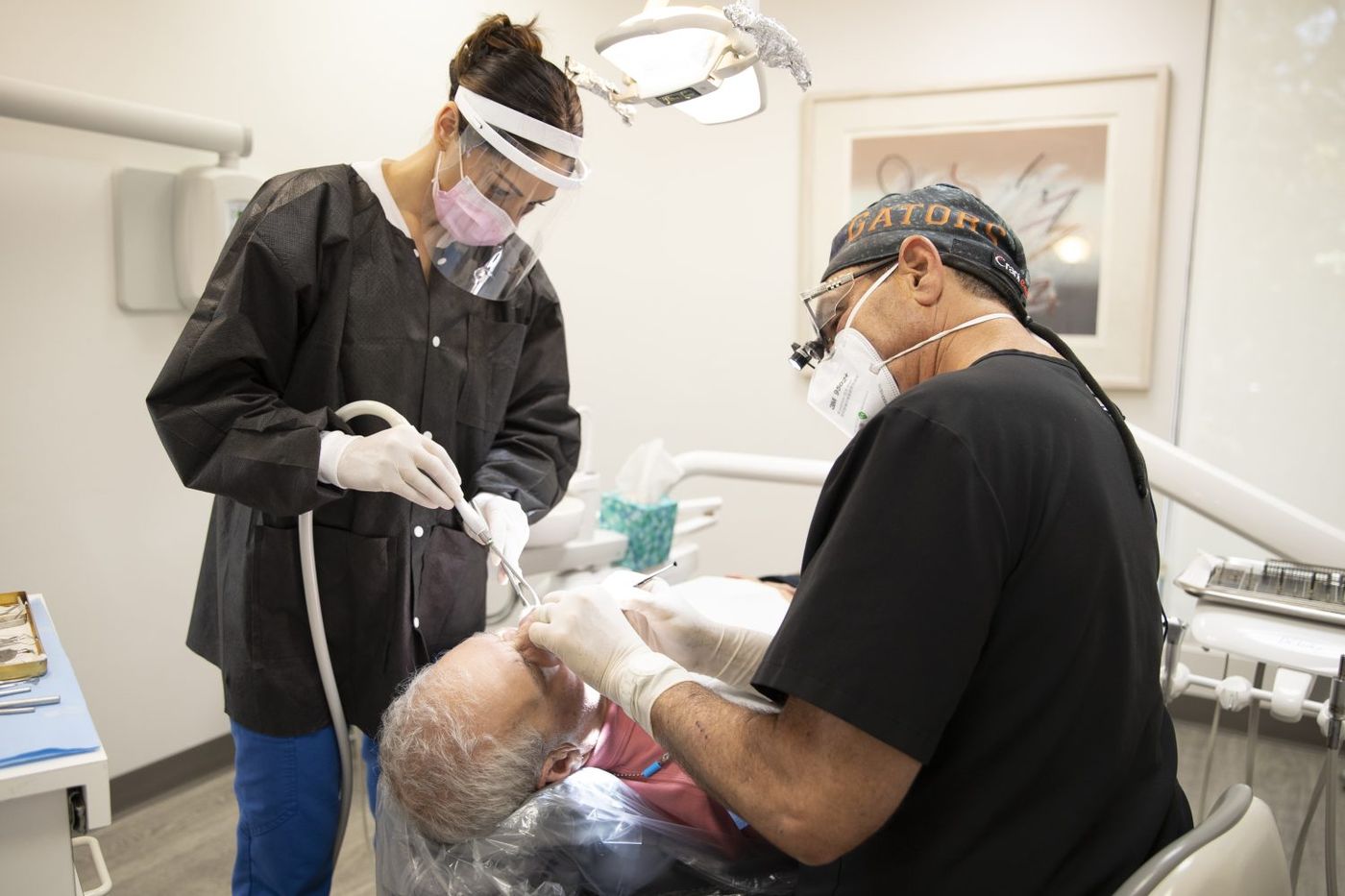
Specialized care for implants affected by infection or bone loss (peri-implantitis). We decontaminate and regenerate the supporting tissues to save your implant and restore its health.
Overview
Implants can get gum disease too
Like natural teeth, dental implants are surrounded by gum and bone. When bacteria build up around an implant, the tissue can become inflamed. Caught early, this is called peri-implant mucositis and is usually reversible.
If it progresses, it becomes peri-implantitis, where the supporting bone begins to break down. Without treatment the implant can loosen and fail. As periodontists, we treat these problems every day and work to save the implant whenever possible.
This treatment may help if you have:
- Bleeding when brushing around an implant
- Swollen or tender gums
- Gum recession exposing the implant
- A loose implant or crown
The Process
What to expect, step by step
- 01
Diagnosis
We measure the gum around the implant and use X-rays or a CBCT scan to check the bone.
- 02
Non-surgical cleaning
Early cases are often treated by deep cleaning and decontaminating the implant surface.
- 03
Surgical treatment
Advanced cases may need the gum opened to clean the implant thoroughly, with bone regeneration where possible.
- 04
Maintenance
Regular professional cleanings and good home care help prevent the problem from returning.
Benefits
Why early treatment matters
Save your investment
Treating inflammation early can stop bone loss and help keep your implant in place.
Stop the infection
Thorough decontamination removes the bacteria driving the problem.
Rebuild lost support
Where the defect allows, regenerative techniques can help restore bone around the implant.
Treating Ailing Implants: your questions, answered
General information to help you prepare. Your periodontist will recommend treatment based on your exam.
Peri-implantitis is an inflammatory condition that affects the gum and bone surrounding a dental implant. Left untreated, it can cause progressive bone loss and eventual implant failure.
The most common cause is bacterial plaque buildup around the implant. Risk increases with a history of gum disease, smoking, diabetes, and difficulty cleaning around the restoration.
Common signs include bleeding, swelling, gum recession, discharge, or looseness around the implant. Early stages are often painless, which makes regular examinations important.
Peri-implant mucositis is inflammation limited to the gum tissue and is usually reversible. Peri-implantitis involves loss of the supporting bone and requires more advanced treatment.
In many cases, yes, particularly when treatment begins early. The outcome depends on the amount of bone loss and the shape of the defect around the implant.
Treatment ranges from non-surgical decontamination of the implant surface to surgical cleaning and bone regeneration. The approach is selected based on the severity of the infection and bone loss.
Treatment is performed under local anaesthesia, so patients remain comfortable during the procedure. Mild soreness afterward is usually managed with over-the-counter medication.
Yes, we evaluate and treat implants regardless of where they were placed. We also coordinate care with your restoring dentist for the best long-term outcome.
Thorough daily cleaning around implants and regular professional maintenance visits are the most effective prevention. Any bleeding or swelling around an implant should be evaluated promptly.
Costs vary depending on the severity of the condition and whether surgical or regenerative treatment is needed. A consultation with imaging provides an accurate diagnosis and a detailed cost estimate.
Not sure which treatment you need?
Schedule a consultation and we'll create a personalized plan — including financing options — for your smile.