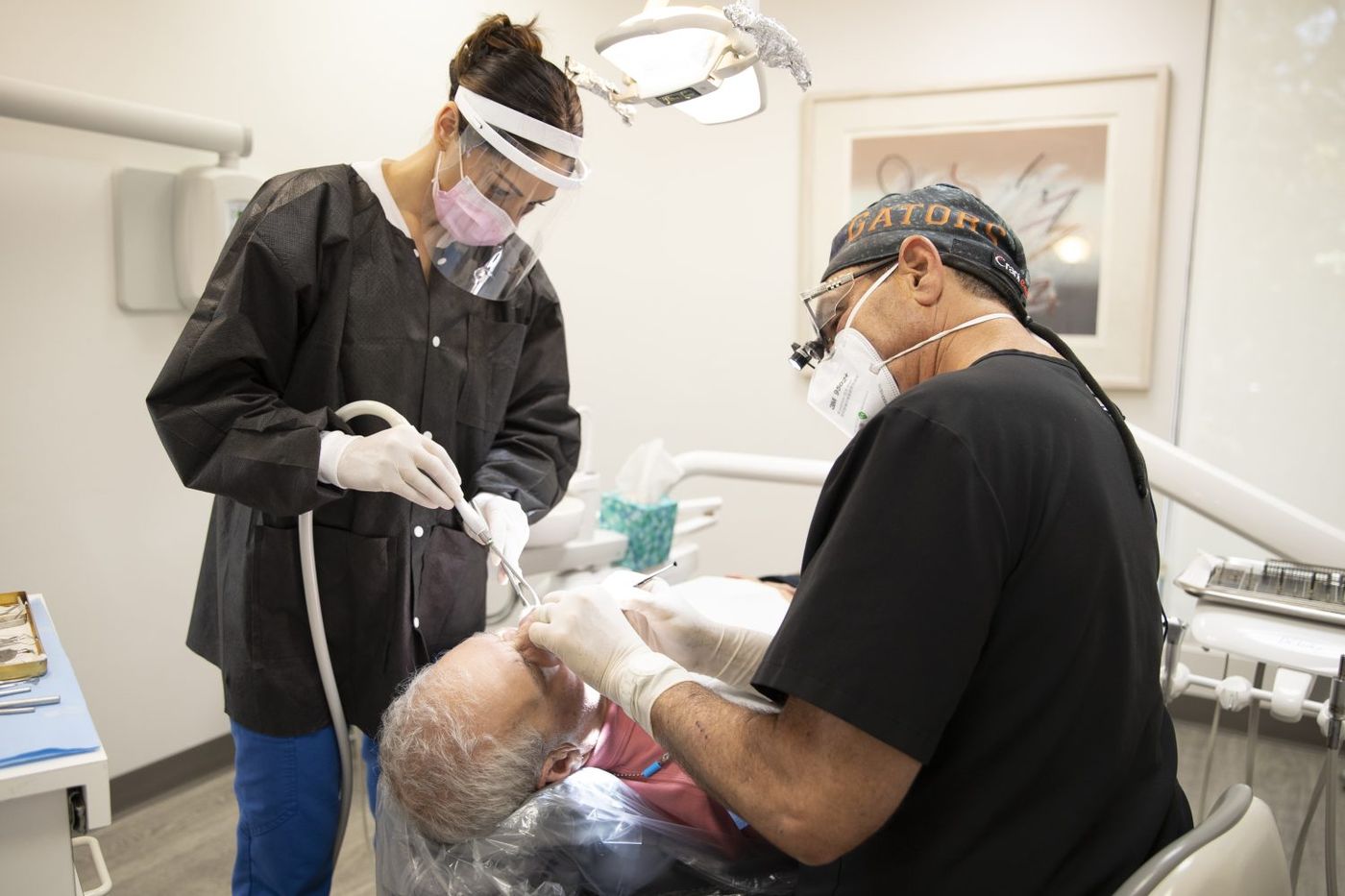
Periodontal (Gum) Therapy
Osseous Surgery (Pocket Reduction)
Reduces deep periodontal pockets by reshaping the gum and bone, making the area easier to keep clean and halting the progression of gum disease.

Overview
Treating deep pockets to save your teeth
In periodontitis, bacteria cause the gum to separate from the tooth, forming pockets. As pockets deepen they trap more bacteria and become impossible to clean at home, and the infection gradually destroys the bone that holds teeth in place.
Osseous surgery, also called pocket reduction surgery, gives us direct access to clean the roots thoroughly and reshape damaged bone. The gum is then repositioned so the pockets are shallower and easier for you and your hygienist to keep clean.
This treatment may help if you have:
- Deep pockets after deep cleaning
- Bone loss from periodontitis
- Bleeding or swollen gums
- Loose or shifting teeth
The Process
What to expect, step by step
- 01
Periodontal evaluation
We measure pocket depths and review X-rays to see where bone has been lost.
- 02
Access & cleaning
Under local anesthesia, the gum is gently lifted and roots are thoroughly cleaned.
- 03
Reshaping
Damaged bone is smoothed and reshaped, and regeneration may be used where appropriate.
- 04
Closure & maintenance
The gum is secured at a healthier level, followed by regular periodontal maintenance visits.
Benefits
What osseous surgery achieves
Shallower pockets
Reducing pocket depth removes the hiding places where harmful bacteria thrive.
Easier to keep clean
Healthier contours let you brush and floss effectively and make professional cleanings more effective.
Helps preserve teeth
Controlling the infection slows or stops further bone loss around your natural teeth.
Osseous Surgery: your questions, answered
General information to help you prepare. Your periodontist will recommend treatment based on your exam.
Osseous surgery, also called pocket reduction surgery, treats deep periodontal pockets caused by gum disease. It involves cleaning the roots and reshaping damaged bone so the gums can reattach at a healthier level.
It is usually recommended when deep pockets remain after scaling and root planing. These pockets cannot be cleaned effectively without direct surgical access.
The gum is gently lifted to expose the roots, which are thoroughly cleaned. Irregular bone is smoothed and reshaped before the gum is secured in its new position.
The procedure is performed under local anaesthesia, so patients remain comfortable. Post-operative soreness is typically managed with medication and usually improves within a few days.
Most patients return to normal activities within one to two days. Complete gum healing typically takes several weeks.
As the gums heal at a healthier level, some teeth may appear slightly longer. This change is discussed before treatment so you know what to expect.
Yes, in suitable defects, regenerative materials may be used to help rebuild lost bone. Your periodontist determines whether regeneration is appropriate during planning.
Osseous surgery controls the infection and reduces pocket depth, but gum disease requires ongoing management. Regular periodontal maintenance helps keep results stable.
Most patients benefit from periodontal maintenance visits every three to four months. These visits keep pockets clean and help prevent the disease from returning.
Costs depend on the number of areas treated and whether regenerative materials are required. A consultation with a periodontal evaluation provides a detailed cost estimate.
Not sure which treatment you need?
Schedule a consultation and we'll create a personalized plan — including financing options — for your smile.